
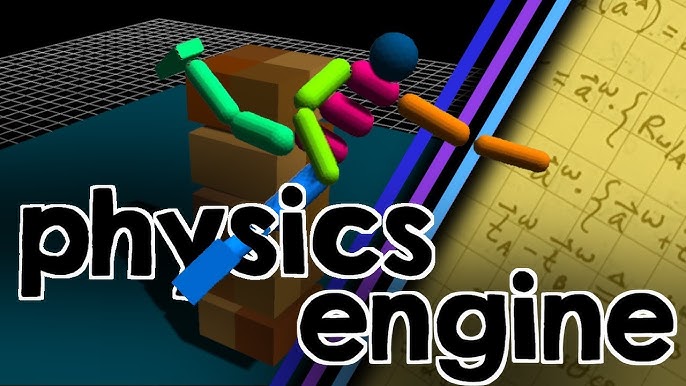
Physics engines play a critical role in shaping how games feel, react and immerse players. Every jump, collision, explosion or falling object you see in a game is powered by a physics simulation running behind the scenes. Without physics engines, game worlds would feel artificial and lifeless. Today’s players expect smooth movement, believable interactions and environments that respond naturally to their actions. This article explores how physics engines work and why they are essential to modern game development.
Table of Contents
What Exactly Is a Physics Engine
A physics engine is software that simulates physical laws inside a game. It handles gravity, collision detection, object mass, friction, momentum and other real world behaviors. When a character jumps, the engine calculates how fast they rise and fall. When a car drifts across the road, the engine determines how tires grip the surface. When an object hits a wall, the engine figures out how it should bounce back.
These calculations happen dozens or even hundreds of times per second, creating motion that looks smooth and realistic. Popular physics engines include NVIDIA PhysX, Box2D, Havok and the Chaos Physics system in Unreal Engine.
Developers who want to explore these engines can visit documentation about Chaos Physics and advanced simulation tools.
Why Physics Engines Matter for Immersion
Realistic physical behavior enhances immersion. If a player throws a rock and it floats unnaturally or passes through objects, the illusion of reality breaks instantly. Good physics helps players feel grounded in the game world. Whether it is a puzzle, shooter, racing game or open world adventure, proper physics helps create believable scenarios.
Think of games like Half Life 2, which made physics puzzles a core part of gameplay, or Grand Theft Auto V, where vehicle handling and crash reactions feel convincing because of sophisticated physics simulation. In action games, physics driven destruction creates memorable moments that players love sharing.
Collision Detection and Interaction
One of the most important responsibilities of a physics engine is collision detection. It ensures that characters do not fall through floors, bullets hit targets and objects interact with each other. The engine constantly checks where objects are and where they are moving.
There are two major types of collision handling.
Rigid body collisions manage solid objects like boxes, stones or walls.
Soft body simulations handle deformable materials like cloth, rubber or jelly.
While rigid body physics is common in most games, soft body simulation is more complex and often used in advanced engines like Unreal or custom studio tools.
A detailed overview of collision systems can be explored through resources where professionals discuss physics algorithms and optimization.
Creating Realistic Movement and Animation
Physics also affects animation. Instead of animating every movement manually, developers often use physics based animation systems. These systems allow characters to react dynamically to the environment. When a character slips, falls or gets pushed, the animation blends with the physics simulation to create more natural motion.
Games like Red Dead Redemption 2 use physics assisted animations to produce lifelike character movement. Rag doll systems, which simulate bodies collapsing realistically, are also part of physics engines.
Vehicle Dynamics and Racing Games
Physics engines play a huge role in racing games where vehicle handling must feel authentic. Engines simulate tire friction, suspension, weight distribution and aerodynamics. Small changes in physics parameters can drastically affect how a car drifts, accelerates or turns.
Games like Forza Horizon and Assetto Corsa rely on advanced physical modeling to create realistic driving sensations. Even casual racing games use simplified physics to maintain responsiveness while keeping gameplay fun.
Destruction and Environmental Simulation
Modern engines can simulate destruction such as breaking buildings, shattering glass or collapsing structures. Games like Battlefield and Just Cause became famous for their destructible environments that rely heavily on physics.
Particle systems also depend on physics to create explosions, smoke or debris that moves naturally. Environmental interactions such as wind affecting trees or cloth simulation in character outfits also come from physics based systems.
Balancing Realism and Performance
Although realism is desirable, physics simulations can be expensive. Calculating hundreds of collisions and interactions each second consumes CPU resources. Developers must balance accuracy with performance to avoid lag or frame drops.
Most engines allow adjusting the level of simulation. For example, a small object far from the player might not need precise physics. Instead, simplified or approximated calculations keep performance stable while maintaining visual quality.
Future of Physics in Games
As technology evolves, physics engines will become even more advanced. Real time fluid simulation, more accurate destruction and AI driven physics adjustments are becoming mainstream. With the rise of virtual reality, physics accuracy is even more important because players expect real world behavior inside VR environments.
Machine learning may also help optimize physics calculations by predicting outcomes more efficiently. This could make large scale simulations possible even on smaller devices.
Final Thoughts
Physics engines are the backbone of immersive gameplay. They create believable interactions, realistic movement and dynamic environments that respond naturally to player actions. Whether you are a developer or a curious gamer, understanding physics engines reveals how much invisible work happens behind every moment in a game.
Also Check Why Indie Games Are Winning the Creativity Battle in 2025
1 thought on “The Role of Physics Engines – Powerful Guide – 2025”