
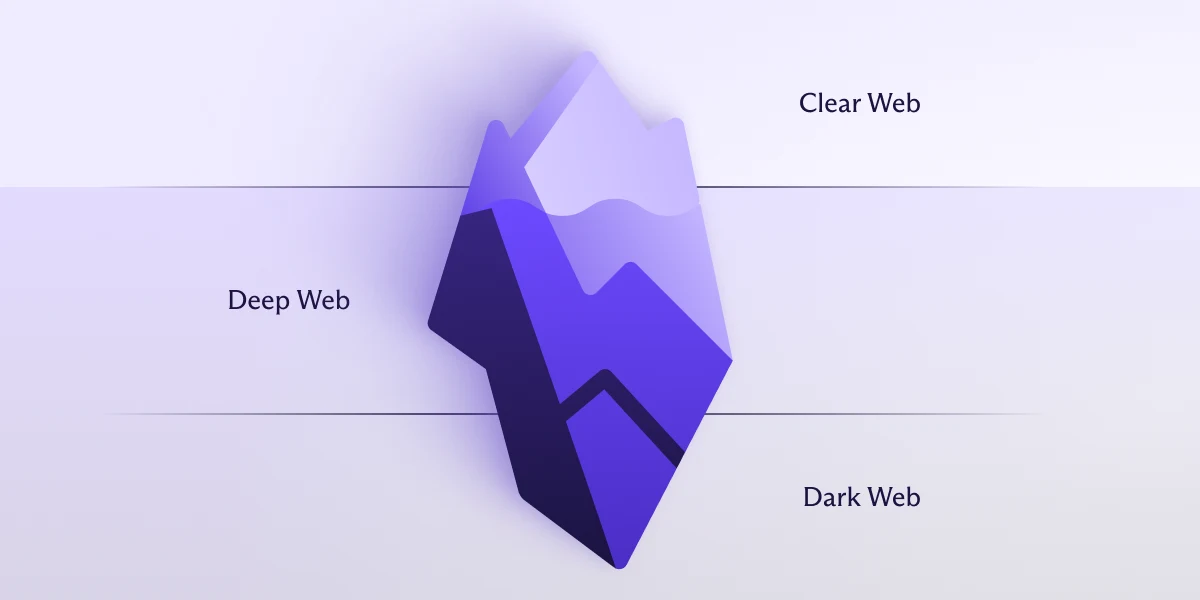
The internet is much larger than what we see every day. Most people only interact with the surface web, which includes websites indexed by search engines like Google and Bing. However, beneath the surface lies a massive part of the internet known as the deep web. This hidden section contains important databases, private networks, password-protected resources, and sensitive information not meant for public viewing. Understanding what it is and how it functions is essential for cybersecurity, privacy, and safe internet usage.
Table of Contents
What Is the Deep Web
The deep web refers to all online content that cannot be accessed through search engines. This includes academic databases, private emails, online banking systems, medical records, and internal company portals. According to the Internet Society’s explanation of internet layers, it is not illegal or dangerous by default. It simply contains information protected by authentication, encryption, or special access protocols.
Unlike the dark web, it is not intentionally hidden. In fact, every time someone logs into their Gmail account or accesses a private dashboard, they are interacting with it. It is estimated that it is far larger than the surface web, making up nearly 90% of all online data.
How the Deep Web Works
The deep web functions by hiding content behind login systems, firewalls, and private databases. Search engine crawlers cannot index these pages because they require specific credentials. For example, academic journals stored on platforms like JSTOR or PubMed are part of it because access is restricted. You can learn more about how search indexing works from Google Search Central.
Many websites intentionally block indexing using a file called robots.txt. This prevents crawlers from scanning private pages. Additionally, it uses secure data transmission methods such as HTTPS encryption to ensure privacy and protection from unauthorized users.
Deep Web vs. Dark Web
Although often confused, the deep web and dark web are not the same. The dark web is a very small portion of the it that requires special software like Tor Browser to access. The dark web is intentionally hidden and often associated with anonymous marketplaces and illegal content. The deep web, on the other hand, includes everyday digital tools that most people rely on.
The Tor Project explains how anonymized browsing works and how it helps protect privacy. While the dark web uses Tor for secrecy, it simply uses authentication barriers to restrict access.
Why it Exists
The deep web exists primarily for privacy, security, and organization. Many types of information should not be public, including:
- Private emails
- Online banking details
- Medical histories
- Corporate intranet data
- Subscription-based research papers
- Government records
Without it protections, sensitive information would be vulnerable to threats. Universities, hospitals, financial institutions, and government agencies all depend on these layers to keep their data safe and accessible only to authorized users.
Benefits of the Deep Web
The deep web provides several important benefits for individuals and organizations. One major benefit is security. Sensitive data stays protected, reducing the risk of theft or misuse. Harvard’s cybersecurity insights emphasize the importance of secure access systems in today’s digital landscape.
Another benefit is efficiency. Businesses uses it portals to manage employees, handle internal communication, and store documents. Educational platforms also uses it to provide students with coursework, grades, and resources.
Additionally, subscription-based research platforms uses it to give universities access to millions of papers and scientific studies. This allows researchers to store and retrieve massive amounts of data without making it publicly available.
Risks and Misconceptions
Although the deep web itself is not dangerous, misconceptions often lead to fear or misuse. One common misunderstanding is that everything hidden is illegal. In reality, most hidden content is simply private or sensitive. The illegal part belongs to the dark web, which is only a small fraction of it.
There are also risks if users access unfamiliar content without proper caution. Private networks can still be vulnerable to hacking if passwords are weak or systems are outdated. Organizations must follow strong security practices, and users should always use secure connections when accessing confidential portals.
How to Safely Access it
Most people access the deep web every day without realizing it. Logging into a social media account, checking bank statements, or managing cloud storage automatically places users inside the deep web. To do this safely, it is important to follow cybersecurity best practices.
Using strong passwords, enabling two-factor authentication, and accessing secure websites through HTTPS are standard security measures recommended by the National Institute of Standards and Technology. Avoiding public Wi-Fi when entering sensitive information is another smart approach.
Conclusion
The deep web is a vital part of the internet that holds a massive amount of private and protected data. Far bigger than the surface web, it powers essential services we rely on every day. Unlike the dark web, the deep web is not dangerous or illegal by design. It exists to safeguard personal information, support secure business operations, and provide access to professional and academic resources. Understanding the deep web helps users navigate the internet safely, appreciate how data privacy works, and recognize the difference between public and private online spaces.
Also Check What is AI Automation and Why It Matters Today – 2025
1 thought on “Understanding the Deep Web and Why It Matters – 2025”