
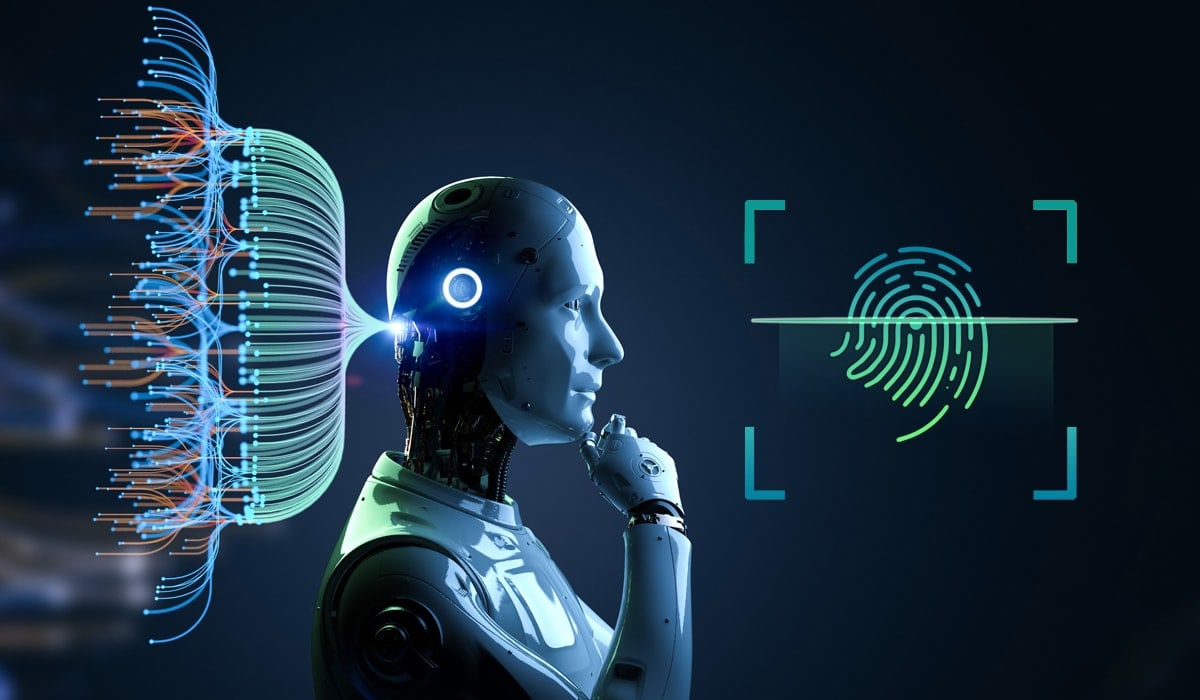
Artificial intelligence has become a driving force behind modern security systems, and biometrics is one of the fields benefiting the most from this technological shift. AI in biometrics is changing how organizations verify identity, secure data, and protect sensitive environments. From facial recognition to fingerprint analysis and voice authentication, AI makes biometric systems faster, more accurate, and more reliable. As digital threats continue to grow, understanding AI’s role in biometric technology is essential for businesses, governments, and individuals.
Table of Contents
What Is Biometrics
Biometrics refers to the use of unique physical or behavioral traits to identify individuals. These traits include fingerprints, iris patterns, facial features, voice prints, and even typing rhythms. Biometrics has always been valued for its accuracy, but traditional systems often struggled with errors and false matches. According to the National Institute of Standards and Technology, biometrics research is becoming more advanced with the integration of AI, making identification more secure and efficient.
How AI Enhances Biometric Systems
Artificial intelligence improves biometric systems by allowing them to analyze patterns, learn from data, and adapt to variations. Facial recognition, for example, relies on deep learning algorithms that process thousands of facial images to understand differences in lighting, angles, and expressions. Google’s AI and machine learning guides explain how neural networks learn from large datasets to improve accuracy.
AI also helps reduce false positives and false negatives. Traditional biometric systems might fail when a user’s appearance changes due to age, hairstyle, or lighting conditions. AI-powered models can recognize these variations and still match the correct identity.
Types of AI-Powered Biometric Systems
AI is used in several types of biometric authentication systems across industries.
Facial Recognition
Facial recognition powered by AI is used in smartphones, airports, law enforcement, and corporate access systems. It analyzes facial landmarks and matches them with stored templates. The technology has become highly sophisticated, with advancements showcased by companies working in this field, such as those discussed in Microsoft’s facial recognition documentation.
Fingerprint Recognition
AI enhances fingerprint scanning by improving image clarity, detecting partial prints, and identifying unique ridge patterns. This results in faster and more accurate authentication, even when prints are smudged or partially captured.
Iris and Retina Scanning
Iris and retina scans are considered some of the most secure biometric methods. AI helps in segmenting the eye region, analyzing texture, and matching complex patterns. These methods are often used in high-security government and military environments.
Voice Recognition
AI-based voice biometrics analyze speech patterns, tone, and vocal frequency. Banks and call centers use voice ID to improve customer authentication. Research from the IEEE Biometrics Council highlights how AI improves voice recognition by filtering noise and adapting to different speaking styles.
Applications of AI in Biometrics
AI-powered biometrics are used across various sectors.
Smartphones and Consumer Electronics
Face unlock and fingerprint sensors rely heavily on AI algorithms. These models learn user patterns and ensure security even when environmental conditions change.
Banking and Finance
Financial institutions use biometric authentication to reduce fraud. AI-based facial and voice recognition systems verify identity before transactions or account access.
Healthcare
Hospitals use biometrics to protect patient data, manage staff access, and maintain accurate medical records. AI ensures smooth authentication even in crowded or dynamic environments.
Law Enforcement and Border Control
AI-powered facial recognition helps identify suspects, locate missing persons, and process passports at immigration checkpoints. The U.S. Department of Homeland Security reports increasing adoption of biometric technologies in border security.
Benefits of AI in Biometrics
AI provides many advantages to biometric systems.
- Accuracy improves significantly because AI models learn from millions of data points.
- Speed increases as AI can analyze biometric data in real time.
- Security becomes stronger with multi-factor biometric authentication.
- Scalability allows biometric systems to handle millions of users without performance issues.
These benefits make AI-driven biometrics ideal for modern security needs.
Challenges and Ethical Concerns
Despite its advantages, AI-driven biometrics come with challenges. One major concern is privacy. Facial recognition systems can be misused for surveillance without consent. Organizations must follow strict regulations and ethical guidelines. The European Union’s GDPR framework outlines rules for protecting biometric data.
Bias in AI algorithms is another issue. If training datasets are not diverse, the system may produce inaccurate results for certain demographic groups. Transparency, fairness, and responsible development are crucial for trust and safety.
Security threats such as spoofing attacks, where criminals use photos, masks, or recorded voices, also pose risks. Developers must implement attack detection mechanisms and liveness detection to ensure reliability.
The Future of AI in Biometrics
The future of biometrics is heavily shaped by AI advancements. Researchers are exploring behavioral biometrics, such as gait analysis and typing patterns, which provide continuous authentication. MIT Technology Review highlights how AI will enable systems to verify identity without requiring active user input.
Multi-modal biometrics, which combine multiple identifiers such as face and voice, will become more common. This approach significantly enhances accuracy and reduces fraud. As AI continues to evolve, biometric systems will become smarter, faster, and more secure.
Conclusion
AI is transforming biometric authentication by making systems more accurate, reliable, and adaptable. From facial recognition to iris scanning, AI enhances every aspect of biometric technology. While concerns around privacy, ethics, and security must be addressed, the benefits of AI-driven biometrics are undeniable. As industries continue adopting advanced authentication methods, AI will play a central role in shaping the future of global security.
Also Check What is Dark Web and How Does It Work – Powerful Guide 2025
1 thought on “Role of AI in Biometrics – Comprehensive Guide – 2025”